
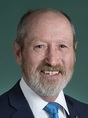
Rowan Ramsey Grey, Liberal Party
3:54 pm
The topic of this matter of public importance is the government's failure to support Australians with the cost-of-living expenses. That is a premise that I totally reject. We've just had a budget this week that actually highlights what an amazing job this government has done managing the economy, bringing the employment down to sub-four per cent—or at least that's where it's heading—creating new jobs and creating new opportunities. But the latest spike in prices is a great concern. They're largely driven by matters outside the government's control, being Russia's invasion of Ukraine and the consequent spike in oil prices, and the complications that have come about with the supply chain from COVID. For instance, international freight rates are up around about 500 per cent.
We've seen a worldwide surge in consumerism. As people have sat at home, their bank accounts have grown and now they want to spend that money, and the freight boxes all around the world have ended up being stacked up at the wrong ports because it's not an equal trade. There are all kinds of complications with the supply chain. That's why we are seeing this price spike. Most good economists predict that it is short term, that we'll see an increase in the production of oil around the world.
One of the things about shale oil is that it has a short-lived well life in so much as you have a low price and they stop drilling, you have a high price and the drills get back out into the paddock. Certainly we've got a high price at the moment. I expect that the oil supply lines around the world will increase. Whatever the reason, we understand the challenges it presents to household budgets. We're providing to low- and middle-income earners—well, it's not why; they were already going to see a tax cut worth between $1,500 and $3,000 to 10 million Australians. That will help with the cost of living. Next year the 37c-in-the-dollar bracket will be abolished. That will help with the cost of living. More people will be keeping more of their own money, and that means they'll be better able to deal with the cost of living. But that's next year and we're dealing with now.
We know that fuel is a big issue. I've already raised it. It's a big part of daily budgets. These steep increases that are caused by Russia's outrageous attack on Ukraine have led to this shortage. Remember that we're coming off a glut. You will remember that the fuel in our bowsers was around about $1 two years ago, and that led to the lessening of supply in the world, as I've touched on already. We're going to halve the excise for six months. That will be worth 22c a litre. MotorMouth, an app I have on my phone, tells me that in Adelaide prices are already below $1.80. They're also at that rate in Port Pirie, Port Augusta and Whyalla. I've done a calculation, and I expect that 22c a litre to be worth somewhere around $30 million over the next six months for my constituents in Grey. That will help with the cost of living. And recognising that people on a fixed income are particularly affected by the cost of living—pensioners, carers, jobseekers, self-funded retirees—there is an immediate $250 payment. On 1 March, the aged-care pension rose by $20 for singles and $15 for dual couples. That will help with the cost of living. Additionally, there's a $420 tax offset for low- and middle-income earners, remembering that on 1 July they will also get the tax cut that I previously mentioned. That will help with the cost of living as well.
Another one that I'm particularly keen on is the PBS. For the people on a fixed income, medication—particularly if you're on multiple medications—can actually deplete the family budget. Of course, we have a PBS safety net, the safety net threshold. The government, in this budget, is lowering the threshold from 48 prescriptions to 36. Let me say that that will also help with the cost of living. Those on fixed incomes will benefit greatly from the package that the government put forward on Tuesday night.
We absolutely recognise the pressures of the cost of living, which we hope will be temporary. I think most of them will be temporary. The instability in the world at the moment will wash through the system, and those supply chains will come back to normal. I don't think there is any chance of us missing this phenomenon in the Australian community. And I'm very pleased with the words that I heard from the Treasurer on Tuesday night and the way that we are addressing this in the short term. It's very important, of course, that we allow for that recovery and that we don't break in a lot of these payments for the long term, which is why they're one-off and temporary. It will give the ability for the budget to recover in the longer term as the economic situation returns to normal.
No comments